Comment by paxys

Comment by paxys 6 months ago

29 replies

The new CEO was brought in to chart the path forward not dwell on the past, and clearly in his eyes the Palm acquisition was a sunk cost. The Touchpad disaster, combined with the CTO completely shirking responsibility for it (as you can tell from this article), probably showed him the writing on the wall.

WebOS was neat for sure but HP was never in a position to compete with Apple. More mobile device launches would simply have meant more money down the drain.
Aloha 6 months ago

The issues that killed webOS had nothing to do with its technical merits (which were many) - it instead was a failure of product management.

* The TouchPad was priced too high for a new entrant with embryonic app support.

* It probably needed more development time before going to market, CTO doesnt really make GTM timing decisions.

* Insult to injury, as this fella pointed out - the applications for webOS extended far beyond a tablet, HP threw the baby out with the bathwater.

* They tried to make a strategic shift into software and services without having a great track record of doing those thing, which compounded all of the above, Palm did have some expertise there, but it was still tossed away.

potatolicious 6 months ago

Agree. I'm sympathetic to the CTO here, but I remember the disaster of the HP TouchPad launch very well - there were multiple fatal errors here that don't seem possible to commit in an 8-week window.

The hardware had basically ~no app ecosystem. That's not a problem that occurs over 8 weeks. The software was also incredibly under-baked, and I'm doubtful that the company pivoted from "this needs more time and should release later" to "full marketing push, press events, and big launch" in that short a time either.

I don't doubt that there was a lot of conflict over strategy with the new CEO, but the framing that all of this happened while he was on the sidelines doesn't seem very plausible.

dec0dedab0de 6 months ago

HP was definitely in a position to compete with apple, and always has been. They might not have been in a position to beat them, but you don't have to be on top to be profitable.

  • FirmwareBurner 6 months ago

    >HP was definitely in a position to compete with apple, and always has been.

    In 1990-2000? Sure, maybe. In 2010? Not a chance. HP was not a SW company like Apple. Apple wasn't making much money from selling Macs in 2001. Their big cash cow came from the iPod which HP couldn't pull off something like iTunes and licensing deals with record labels, they were just a commodity HW company (ignoring the oscilloscope, sensors, medical and the other shit).

    >They might not have been in a position to beat them, but you don't have to be on top to be profitable.

    From where I am, I saw clear as day that markets usually have room for only two large players who will end up owning 90% of the market, with the rest of the players fighting for the scraps. Intel & AMD, Nvidia & AMD, iOS & Android, PlayStation & Xbox, Apple & Samsung, Windows & Mac, etc,

    HP was in no position to win against Apple and Google for a podium spot so they left in due time. Even Microsoft couldn't pull it off.

    • bee_rider 6 months ago

      I agree.

      OEMs have always been weird because in some sense consumers attribute the computers to them. But they don’t have a core competency in software. And they don’t have a core competency in the hardest parts of hardware—chip design, etc.

      Picking the right parts to buy, assembling them, shipping them, that’s all important stuff. They weren’t in a position to win against Apple; they were playing one of the three games Apple plays, almost as well as Apple.

      • bluGill 6 months ago

        HP did have competency in a lot of those areas though. They were a large company that did have fingers in a lot of different things, both software and hardware. Their PCs were visible, but they had lots of other divisions doing lots of things.

        • cogman10 6 months ago

          Which was perhaps their major issue. The HP expertise was all over the place with divisions around the globe reinventing the wheel. Couple that with a recently decimated and outsourced IT department (Such a colossally dumb decision) and you could effectively see HP not as one company but 100 companies all doing their own thing.

    • coredog64 6 months ago

      Circa 2005, HP did a licensing deal with Apple to sell their own iPod Photo.

  • paxys 6 months ago

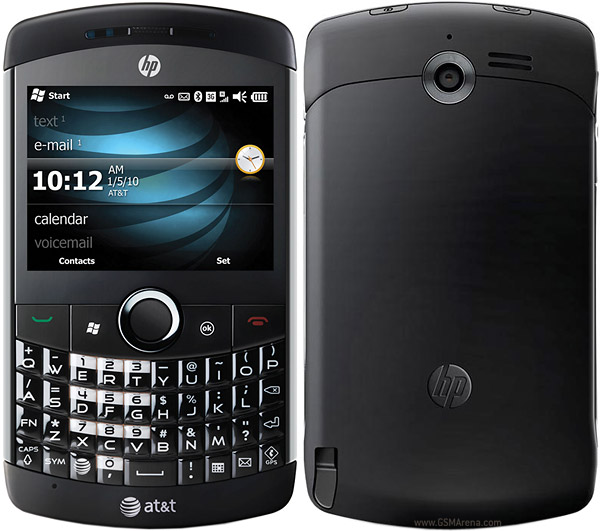
    By 2011 Apple had launched iPhone 4s, Android manufacturers had sold 100M phones, and HP's latest and greatest mobile device looked like this - https://fdn2.gsmarena.com/vv/pics/hp/hp-ipaq-glisten-1.jpg.

    They simply had been asleep at the wheel for too long. And even then, the correct move would have been to adopt Android instead of thinking you could build and control your own ecosystem (something they finally did in 2014).

    • bluGill 6 months ago

      In early 2011 when I told people I had an Android they had no clue what I was talking about. A well done long term investment in other phones could have made a big difference - but HP wasn't willing to make it so we will never know. (Microsoft released their Windows phone in 2012, again killing it before it took off).

      • thaumasiotes 6 months ago

        > Microsoft released their Windows phone in 2012, again killing it before it took off

        That 2011 iPAQ has a Windows button. Wikipedia lists them as running "Windows Mobile".

    • thaumasiotes 6 months ago

      > By 2011 Apple had launched iPhone 4s, Android manufacturers had sold 100M phones, and HP's latest and greatest mobile device looked like this

      That looks just like a BlackBerry. What's the problem supposed to be? RIM sold 52 million of them that year.

      They're much easier to use than modern phones, because you don't need to touch the screen. The only advantage of the full-screen iPhone / Android style is that you have a bigger image when watching videos.

  • [removed] 6 months ago
    [deleted]
cmrdporcupine 6 months ago

I actually think if there was anybody who could have competed effectively against Apple at this phase -- on branding -- Palm was it. It had recognition and association with the kind of product. And a patent portfolio, along with it.

I seem to recall there was rumours of the time of Apple sniffing around Palm as an acquisition target, even? I get the impression HP made this purchase simply on account of a strategic move to stop Apple from doing the same, and to get the patent portfolio that came out of it.

And the Palm Pre really was a decent phone, and the software relatively compelling... they just couldn't keep up on the HW manufacturing side.

At the time this was potentially a solvable problem, Apple hadn't become the juggernaut it is now.

I also recall that Jobs was famously pissed at Zuckerberg for launching Facebook on WebOS before iOS?

EDIT: I'd add to this that Palm had the talent at the time, too. Consider Mattias Duarte was the VP at Palm who headed up WebOS UX.. and then went on to direct the same thing for Android at Google, out of which came Material Design, etc. etc.

al_borland 6 months ago

I thought WebOS looked great and thought it was the only real chance we ever had for a 3 platform. Much of the UI we take for granted in mobile devices today came from WebOS (such as card based app switching and swiping to close). I would have loved to see what it could become, rather than relegating it to TVs. iOS wasn't what it is today back then. It was still pretty new itself, and lacking what most would say are very basic features today.

I often wonder what HP would look like today had Léo Apotheker not been such an awful fit. The damage 1 person can do in less than a year is astonishing. He even proposed selling off the PC division. WebOS was a fairly new acquisition and very well could have been the future, but he couldn't see any vision outside of software with his background. HP was built on hardware, they did't need to pivot that hard. It seems the stockholders agreed.

mosdl 6 months ago

From what I heared (I had some popular webos apps) the touchpad hardware was forced by HP onto the webos team.

commandlinefan 6 months ago

> never in a position to compete with Apple.

I kind of wonder if Apple could pull off something like an iphone or an ipad or even an ipod these days, without Steve Jobs around.

  • Tteriffic 6 months ago

    Vision Pro, different kind of device but same idea

    • scarface_74 6 months ago

      The Apple Watch though is much more successful than the iPod ever was.

navigate8310 6 months ago

HP had successful lineup of pocket PC devices that is iPAQ, so I still believe they could've made WebOS as alternate.

nashashmi 6 months ago

WebOS should never have tried to compete with Apple. They should have been on a slow march to their own definition for enterprise services. And then pivot to the consumer development market

MadcapJake 6 months ago

I won't argue that this wasn't the appropriate action given the circumstances in capitalism today but we've got to stop legitimizing buying companies and then watching the market of product options shrink and engineers, amongst many other career employees, lose jobs. Companies should be required to continue to maintain some semblance of their acquired company's product portfolio for a good long while, otherwise what purpose did you acquire that company for? Killer acquisitions are still bad whether through intentional choice or negligence.

  • bunderbunder 6 months ago

    I suspect that making business mistakes illegal would ultimately cause more harm than the problem such a move is trying to solve.

    And I think that there's an unstated major premise behind, "what purpose did you acquire the company for?" It assumes the existing product portfolio is already in great shape and running well. Except, it's probably better to assume the opposite. Companies that are ticking along smoothly like that don't tend to be the ones that are up for sale. So usually the acquiring company's thesis needs to be something like, "we think the technology is sound but it's having problems with product/market fit that we are uniquely positioned to solve for them." And that's a thesis that directly implies changes to the existing product portfolio.