Comment by torginus

Comment by torginus 2 days ago

203 replies

I feel like there's some credibility to 'this time it's different'

The US economy depends on the country's position of world hegemon - the US dollar is the world's main reserve currency, the US enforces international order and trade rules via its military strength, it dominates technology and culture through 'US defaultism'.

I dont think AI even factors in to this.

The US economy is priced for global reach - if it manages to lose that through a combination of credible competitors, and loss of goodwill - it's going to be in heaps of trouble.

The looming US debt is also a great question - a lot of economists have argued that since most US debt is good. It's mostly in forms of treasuries purchased in USD that pay in USD - this means the indebtedness creates a huge amount of dollars abroad that foreigners have to then spend on US services, driving demand.

Should the US become an unfriendly power to the rest of the western world, it will find the demand for its currency plummeting, which I don't want to outline is a big issue.

All said, I think if the US continues down the political path it currently seems to be pursuing, 'this time it's different' actually will be.
BobbyJo a day ago

> It's mostly in forms of treasuries purchased in USD that pay in USD - this means the indebtedness creates a huge amount of dollars abroad that foreigners have to then spend on US services, driving demand.

Strangely enough, this is exactly the opposite of how it works. The dollars abroad tend to stay abroad, as either a more stable alternative to local currencies, or a reserve currency. Likewise, treasuries held abroad tend to stay there as reserves. This is how the US is able to run both a huge debt, and a huge trade deficit. If the dollars were being repatriated, the trade deficit would close, and the influx of money would cause hotter inflation. Same with treasuries, yields would spike as demand fell.

There are lots of second order effects there, good and bad, but, basically, those dollars not coming home has funded America for quite some time.

  • CraigJPerry a day ago

    I, a foreign entity, have sold something to an american and now have 10 dollars and zero treasuries.

    I purchase a treasury. I have zero product, zero dollars and one treasury.

    At some point in future i have zero product, maybe 12 dollars and zero treasuries. Presumably i now either repeat the cycle or use my winnings to spend on us output.

    GP’s version checks out, your assertion about dollars staying abroad doesnt track? What am i misunderstanding - How did these dollars get abroad, how did they repatriate to buy treasuries, how did a treasury become a reserve, how did the dollars still exist abroad after being exchanged for treasuries?

    • DangitBobby a day ago

      > Presumably i now either repeat the cycle or use my winnings to spend on us output.

      What you are missing is that these dollars can be circulated indefinitely in the global economy without ever repatriating, because they are valuable and useful as actual currency. They may never come back to the US.

      • AdamN 21 hours ago

        They also don't have to circulate - they can be used as collateral for debts.

        • HeyBigE 17 hours ago

          Indeed, everyone should be familiar with the "eurodollar" system - it's critical to how the world economy works.

    • carbonguy a day ago

      > I, a foreign entity, have sold something to an american and now have 10 dollars and zero treasuries.

      Or you sold something to a non-American entity in a dollar-based market, eg. oil. The dollars do come from America to begin with, but once they get "out there" they work as a medium of exchange for whoever wants to use them for that purpose.

      • direwolf20 a day ago

        Which is why the US historically bombed any country that sold oil for other currencies, but now china is negotiating the petroyuan and it's working.

    • [removed] a day ago
      [deleted]
    • raincole a day ago

      > Presumably i now either repeat the cycle

      Most of the time this is exactly (foreign or not) institutions do.

      Think about it, if the 10-dollar treasury is due and you got your money back, the US debt will go down by 10 dollars. However, in our reality, the total amount of US debt almost never goes down.

      Of course some interest will be used in other ways, like spending on the US goods or staying as cash to provide liquidity. But at the end of the day, the most popular way to spend the money got from due treasuries is... to buy more treasuries.

    • ezconnect a day ago

      Because the world trades using US dollars. Country A needs to buy something from Country B. Country A needs to buy/get dollars to buy stuff from Country B. Country B will not accept anything but dollars or gold for its products because it also needs to buy other stuff like oil in dollars from other countries.

      • direwolf20 a day ago

        It could accept any credible currency if it was connected enough. Euros, yuan, rupees and yen aren't going anywhere for at least 20 years. Each one is a separate system and countries mostly connect to just one, which is USD, but that doesn't have to be the case forever.

        India won't accept euros because it's not part of the ECB, not because it doesn't believe in their value. But India has accounts at US banks in dollars.

        Banks do this, not countries. Most banks in the world have accounts at US banks to accept dollars with, they don't have accounts at eurozone banks to accept euros with, or Japanese banks to accept yen with. It doesn't matter in everyday practice because it's easy to exchange euros in eurozone banks or yen in yenzone banks with dollars in dollarzone banks. There's plenty of infrastructure for that. It matters in long–term economic trajectories because all those banks are holding US dollars and the US exports inflation to them and they're not holding euros and then ECB can't.

  • bertjk a day ago

    If dollars were being repatriated, but as investment into financial instruments and real estate instead of purchases of goods and services, then that would not affect the trade deficit, right?

  • locknitpicker a day ago

    > Strangely enough, this is exactly the opposite of how it works. The dollars abroad tend to stay abroad, as either a more stable alternative to local currencies, or a reserve currency.

    I think you have it backwards. The US dollar can be handled as a more stable alternative only if it's actually stable. As soon as the US government starts to deteriorate goodwill and outright be hostile towards the world, not only does the US dolar lose its value as a stable alternative but foreign governments start to be motivated to dump their assets, which further tanks its value. In the past couple of weeks we started seeing countries outright dump their investments in US dolar to derisk their portfolio, and they did it at the tune of billions of dollars. You also started to see political pressure for foreign governments to demand their gold reserves are pulled out of the US, which means this pressure goes way beyond US dollars.

SllX 2 days ago

> Should the US become an unfriendly power to the rest of the western world, it will find the demand for its currency plummeting, which I don't want to outline is a big issue.

Right now this is much more of a maybe, possibly, eventually, over a long enough time horizon.

As of the end of 2025, USD still made up 57% of foreign reserves vs 20% for the Euro and 3% for the Chinese renminbi. Nearly all commodities are still priced in USD and about 50% of trade invoicing is done in dollars, closer to 60% if you exclude the Eurozone. USD also makes up about 60% of SWIFT transactions.

So the demand is still there today and de-dollarization is not really a thing in aggregate as of January 2026, despite all of the events of the past year or so.

So if this time is different, I’m not seeing it yet.

  • panarky a day ago

    The international "rules-based order" is a good idea when most nations play by the rules most of the time, and when the most powerful at least pretend to follow the same rules as everyone else.

    A world order based on rules makes it possible to live at a much higher level of abstraction.

    Abstractions like rule of law, democracy, government currencies and stock exchanges are intangible and imaginary. They're mostly just figments of collective belief. But these wispy and unreal ideas that everyone believes in make it possible for most people to live longer, healthier and less difficult lives.

    The "rules-based order" was always partly mythical, but as long as everyone kept pretending, it mostly continued to function.

    But when we devolve from the rules-based order to the old order of pure power and might-makes-right, kings and dictators, when there's no more collective belief that the rules apply to the rich and powerful, then the tower of abstractions collapses, and we're back to the cold, hard, brutal and difficult real world.

    People will find out that life in the real world is a lot poorer and more miserable than life at the top of the tower of abstractions, even if your brokerage account appears to double.

    • jmward01 a day ago

      I generally agree with your comment except the 'back to the real world' part. This is just the difference between a world with the gains that cooperation give verses a world with just the maximized minimum return that distrust leads to. A trusting world is the real world we have seen for decades. It is a real world we can choose to keep pushing for.

      • nradov a day ago

        Who is the "we" who can choose? People training this from places like the USA and India have at least some modicum of choice. In China not so much.

    • Lutger a day ago

      Neither is 'real'. The power of might depends on belief just as much as the power of rules. You need a whole lot of compliance, even when forced by fear and terror, to just keep up a police state. The belief consists of where people think other people assign authority to, at large. But that can be just as brittle as a meme stock if the time is right.

      Social reality is always constructed. No single construction is more real than any other.

      • panarky 20 hours ago

        A system that is closer to physical, tangible reality is more "real" than one built on many layers of concepts, beliefs and ideas.

        Just as "real assets" like buildings, machinery and metals are more "real" than abstract assets.

        Abstract assets like shares of a corporation, intellectual property, cash in a bank account, promises to deliver a commodity in the future, and other intangible concepts only exist because we collectively believe they exist and trust each other to follow rules.

        There are real weapons and prisons at the bottom of this stack of abstractions to force people to comply, but it's mostly collective belief, trust, culture and tradition.

        When we devolve from a rules-based order to might-makes-right, those layers of abstraction between us and the weapons evaporate, and ordinary people like moms and ER nurses get gunned down in broad daylight by agents of the state asserting raw power.

        Abstractions like law and due process evaporate, and the "real world" underneath is nasty, brutish and short.

    • mmooss a day ago

      > Abstractions like rule of law, democracy, government currencies and stock exchanges are intangible and imaginary. They're mostly just figments of collective belief.

      > But when we devolve from the rules-based order to the old order of pure power and might-makes-right, kings and dictators, when there's no more collective belief that the rules apply to the rich and powerful, then the tower of abstractions collapses, and we're back to the cold, hard, brutal and difficult real world.

      Many have absorbed and believe the argument of the might-makes-right crowd that their vision is 'real' and their enemies' vision is 'imaginary'. Unless people believe in what they seek, they are lost.

      There's nothing imaginary about it; that theory is paper thin and doesn't survive simple examination. Obviously, humans are social animals that live in groups, have powerful intellects, and therefore have tremendous ability to cooperate and work together toward greater good; we've done it many, many times. Freedom and democracy have appealed powerfully to people worldwide, in a tremendously wide variety of cultures. That model was created by people who had experienced WWI and WWII; they knew more of your 'reality' than probably you or I ever will, and with that knowledge and experience they created this order.

      And the greater good long predates that; religions and similar ethical codes based on the greater good long predate modern democracy and the rules-based order. Rules-based orders predate it. The Gospels in the New Testament are an easy, very familiar example, from 2,000 years ago (and a significant basis of modern freedom and democracy). Similar is true for abstractions like law, government, justice, etc.

      We all are biologically the same, essentially, as the best of humanity and the worst - both are in all of us. It's our choice, our moral choice, what we do. That is also a fundamental that long predates the post-war order, democracy, the Englightenment, etc. Inevitability is a cheap tactic long used by those whose ideas are undesireable and don't withstand scrutiny.

      Our choice is easier than those who survived WWII, and their predecessors. Our ancestors gave us the tools, the institutions, etc. They had to build them from nothing for a skeptical world.

      • throwthrowuknow 19 hours ago

        Religion isn’t based on “the greater good”, it’s always explicitly about the will of the god or gods involved and obeying or appeasing them.

        • mmooss 15 hours ago

          About religion, I don't think we can say "always" or anything near to that.

          I agree that religions commonly use the god/god's will as the reason, but I don't think we should take that at face value. It's the argument to trump all others - rulers often claim to be chosen by the will of the supernatural - but not the reason the rule was made, which is a product of the cultures involved.

          And humans often come to the same ethical conclusions: The rules against murder and rape, the priority on justice and fairness, as examples, are universal across cultures regardless of religion (look up 'cultural univerals').

      • Lutger a day ago

        The source of truth in fascism is not popular support or inquiry, thus they always need to channel some privileged connection to reality, or claim to voice the true will of the people and authentically represents the pure will of the nation.

        Its a farce, of course, but one that can sometimes muster enough support to keep the signs in the shop with just a bit of intimidation and violence to back it up.

    • majormajor a day ago

      The US has played by different rules, might makes right, in the western hemisphere for a long time.

      Screwing around with Greenland shit, on the other hand, seems riskier.

      • [removed] a day ago
        [deleted]
      • mjanx123 a day ago

        In practice the US could already do whatever it wanted in Greenland/Canada etc. The options for the motivation behind the theatrics I see. 1. Instill fear in the vassals->support for militarization rises there->they become more useable as proxies against RF/China 2. Just another Trump silliness

    • dwoldrich a day ago

      [flagged]

      • mlsu a day ago

        Buddy if you think financial crashes were bad today, you should see what happens when banking is not regulated (great depression). Or, if you think war is bad today, you should see what happens when the world becomes multipolar and countries start carving up the world for territory (WWII).

        Like please, read a history book.

        I'm sure I agree with you that there are many problems with this system but life without it can get so much worse. The green agenda? 4G? That's the worst thing you can imagine?

      • RGamma a day ago

        What do you propose instead? Why don't the things that you condemn in "liberal democracy" happen there?

        • dwoldrich a day ago

          Why do they happen now and why are you fine with them?

      • pegasus a day ago

        Actually, what you're listing above is just another set of beautiful (to you) abstractions. No, "banksters" are not "100% parasitical". The percent is definitely less than 100. But, you know, as they say: the devil is in the details.

    • YZF a day ago

      The rules based order is mostly a fabrication of recent history. Perhaps between the fall of the Soviet Union, China becoming more open, and the general peace and prosperity it seemed like it existed.

      Politics between countries has always been around interests. Countries have no interest in giving up their sovereignty. They may pretend to respect these "rules" when it suits them and then ignore them when it doesn't. Everyone is focused on how "bad" the US is but a) the US has always more or less done whatever it wants b) Russia and China (and many others) have never even pretended to play or accept these "rules".

      Canada's Carney whines about "international order" when just a few years ago China simply abducted Canadians in response to the supposed "orderly" arrest of the Huawei CFO to be extradited to the US. So Canada basically abducts the CFO of a major Chinese company and China abducts Canadians in retaliation and that's a rules based order to who exactly? And we can put together an endless list of an endless number of countries. So when exactly was there ever a rules based order except as a tool for countries to bully each other and for the poorer dictator led countries to try and get a seat at the table because they can vote in the UN general assembly.

      • tpm a day ago

        > Russia and China (and many others) have never even pretended to play or accept these "rules".

        This false. They have pretended to play by the rules, and when breaking them, to at least manufacture some pretext, or to deny it was a state activity at all.

        One example I can give you is that when invading Czechoslovakia in 1968, the Soviet Union convinced a few Czechoslovak politicians to write a letter inviting the forces for "brotherly help", thus manufacturing a case that it's not really an invasion. They didn't have to do it, the force differential was overwhelming, but they did it because they could point at the letter on international stage.

        All this may seem a bit pointless but binding them in international structures brought interesting fruit in the wake of Helsinki conference on human rights. After that they were forced to at least somewhat follow the signed documents which lead to significantly better conditions to dissidents behind the Iron Curtain. And there are many examples like this, when pointing at international rules actually made things better. So let's not throw that away.

      • cjfd a day ago

        Incorrect. The rules based order was first attempted after the first world war and then created after the second one. These are lessen that have been bought with blood. Lots of blood. Megaliters of it. The incredible stupidity of throwing that away is absolutely disgusting.

  • maxglute 2 days ago

    >demand is still there today

    Not all demand the same. There are broadly 2 types of USD buyers

    1. price insensitive: sovereign banks, who buys for liquidity/storage

    2. price sensitive: hedge funds, private buyer who buys returns

    Type 1 buyers are bailing out of treasury. Type 1 are marginal buyers, the close auction regardless or rate, this keeps rates low -> debt servicing low. They artificially depress yield to non market rates, without them rate go up because you have more price sensitive buyers who buy for returns. This increases borrowing costs, hence US debt repayment rising massively.

    Type 1 buyers, i.e. US allies (and historically even adversaries) soaked up treasuries are now de-dollarizing / buying gold in lieu of _more_ USD. Type 1s underpin the "privilege" part of exorbitant privilege. The more they de-dollarize the more dollars become exorbitant, aka debt like everyone else. Type1, sovereign held 60% of USD to 40% in last 5 years. This large part of why interest tripled and debt servicing went from 350B to 1T in 5 years. Type1s exit to 20% in another 5 years and maybe interest goes to 5%, debt servicing 2T+. It's the difference between 10%/20%/30% debt servicing as % of federal revenue.

    This not to mention USD reserve ticking down at 1% per year means meaningful changes in our lifetimes, and velocity may increase with developments like Saudi no longer locking oil to dollar. Less USD as % of global reserve = more network effects of alternate payment = increased potential velocity of USD reserve drop. This doesn't mean other currencies pickup all slack, i.e. central banks seem to be going in gold / commodities with no counter party risk for new storage. The net result is USD will still be around, in large volumes, but the cost/debt to sustain the system will be "normalized" while US budget is historically is built around USD debt being privileged. AKA difference between borrowing money from family vs payday loans.

    >Nearly all commodities are still priced in USD

    PRICED as in benchmarked in USD, but =/= USD is being spent to settle them. There's a fuckload of commodities where PRC alone buys 30/40/50%+ of global production, and while quoted in USD, increasingly settled in rmb/CIPS, bilateral currencies, BRI infra or other swaps mechanisms that bypasses USD. This one of the largest source of dedollarization - PRC went from single digit % to plurality of cross-border settlements in RMB/non USD. Though this is just very recent leading indicator that USD is functionally circumventable.

    • cbdevidal a day ago

      There is another type of demand that I rarely see mentioned. Not only does the United States owe trillions of US dollars, other nations do, as well. They hold many trillions worth of loans denominated in US dollars. They must be repaid in US dollars and not in any other currency.

      And not just to the United States but to other nations, as well. South Africa owes US dollars to Australia, Australia owes US dollars to Brazil, Brazil owes US dollars to Argentina, etc.

      These nations are hungry for every dollar we print. Even if every trading partner dropped the dollar for trade tomorrow, and if everyone who owned Treasuries all sold them at once, there would still be demand for US dollars to repay their loans.

      The IMF made them an offer they couldn’t refuse, and spun a sticky web of a debt trap as a result.

      Three minute video: https://m.youtube.com/watch?v=_SaG9HVXMQg&pp=ygUQZG9sbGFyIG1...

      • maxglute a day ago

        >They must be repaid in US dollars

        IMO this one of those cases where dollars is ultimately benchmark than requirement, IOU/settlement forms can always be restructured/renegotiated if USD is no longer lender of last resort, i.e. alternative payment systems enables take it or leave it deals in medium/long term.

        USD/reserve status snowballed because US controlled techstack postwar which US leveraged (along with military hegemony) to USD controlling primary energy (petrodollar). Civilization/modernity was locked behind USD. Money followed existential goods provider, that's the real USD / unipolarity moat. There's no take it / leave it from US company scrip because leaving eurodollar system = technical default (most usd loans hardcoded on newyork/english law) from eurodollar western financial system = death sentence. Once that lock/dependency erodes all kinds of force majeure geopolitics can rationalize breaking dollar contracts. AKA multipolarity.

        If alternate techstack/payment systems pops up and reach tipping point, country A can just say to country B who only wants USD (due to alignment or whatever), I don't have enough USD, here's RMB & cips/Brics+ & mbridge basket of equivalent value. This geopolitical layer, if BRIC+ can offer fossil, food without US and PRC can offer renewable energy, capital goods, consumer goods, technology, including 80% as good semi and civil aviation... etc if chokepoint goods are no longer exclusively under USD perview, then USD enforcement mechanism simply dies.

        If we're talking about loans/aid, IMF is really pittance, low hundreds of billions. It's why PRC is now using their 3T USD surplus to basically do their own shadow USD lending without IMF conditionalities... countries now don't need to buy USD from US. And somehow PRC currently lending / providing swaplines with their USD at lower rates than US treasury. Incidentally, this dollar recycling also lowers demand for new USD bonds, further reduce type1 margin buyers. This circles back to other nations own trillions of USD to each other... when you remove type1s, you're left with type2 private sector / non bank financial institutions - these are the buys where each USD bought increases triffin burden, i.e. they are the exorbitant curse / payday loans traps that makes USD reserve more expensive to maintain. Their demand is a trap, not a benefit.

  • BobbyJo a day ago

    > So if this time is different, I’m not seeing it yet

    Compare those numbers to 5 years ago. Remember, this is the timescale of a country, not a beagle. America has run on the strength of the dollar for decades, and the symptoms of that collapsing are likely to play out over decades.

  • dyauspitr a day ago

    That number has been dropping by a percent every year for USD over the last 10 years. It used to be 65% USD in 2015

    • SllX a day ago

      Sure, and in 1992 it was 46%, and in 2000 it was 71% and in 2013 it was 61%.

      USD foreign exchange reserves have definitely declined from their peak, but by “declined” we’re talking about going from “overwhelmingly dominant” to “merely dominant” to potentially in a few years “equal to every other foreign currency reserve in the world combined”, and maybe USD foreign exchange reserves will decline even further beyond that point.

      • somenameforme a day ago

        There's some major historical events here. It's not just random movement. Here is a sort of visualization of key points and the USD share of global reserves with the events attached. The number in percent is the USD share of global reserves.

        1970 (85%) - Up until 1971 [1] the USD was backed by gold by the Bretton Woods system. Other countries could trade USD in for gold at a fixed rate and in exchange would peg their currencies to the USD and trade in the USD. The idea was to prevent the US from ever being able to exploit their power in this system because if we printed too many dollars other countries could just hoover those dollars up on the cheap, convert them to gold, and make a bunch of money. Nonetheless we did print excessive amounts of money and abuse the power this system was granting us. So France dutifully hoovered up those dollars and made a gold call. We said 'nah', defaulted on our debts, and withdrew from Bretton Woods. This led to the famous quote from Nixon's Secretary of the Treasury: "The dollar is our currency, but it's your problem."

        1990 (47%) - Following those events, the USD began seeing rapid inflation, and other countries were rapidly dropping the dollar. This 'peaked' around 1990. But then in 1991 the USSR collapsed. This not only left the US as the undisputed and sole 'king' of the world, but also led to these former nations beginning to dollarize once the dust had settled. The USD suddenly again starts to see mass adoption.

        2001 (72%) - The adoption reaches its peak in 2001. At this point not only was there the dotcom bubble, but the world order begins clearly shifting with China and Russia developing increasingly rapidly and looking to become viable world powers once again. And there's been a gradual process of de-dollarization since then declining to where it is today to less than 57% and very much trending to where we were right before the USSR collapsed.

        2025 (57%) - Where we are today. We're very much trending towards 1990, only 10 points away, which is the level when everybody was dumping the USD, the US economy was shaky at best, and there was another major superpower in the world and nobody was quite sure who would 'win.' This is far more significant than 'random noise' you're implying.

        ---

        I am leaving out plenty of relevant happenings including the transition to the petro dollar, South American economic crisis, and so on - but these only contribute to eras I think, while the above are the main drivers.

        [1] - https://wtfhappenedin1971.com/

  • jacquesm a day ago

    The end of 2026 was remarkably different to the world of today, and it that's logical it is - checks calendar - already 31 days ago. Now imagine another year of this.

    • sodapopcan a day ago

      > The end of 2026

      Seems you didn't check you calendar hard enough ;)

      • jacquesm a day ago

        hah! it was 6 am after a long night of hacking...

raincole a day ago

> The looming US debt is also a great question - a lot of economists have argued that since most US debt is good. It's mostly in forms of treasuries purchased in USD that pay in USD - this means the indebtedness creates a huge amount of dollars abroad that foreigners have to then spend on US services, driving demand.

You got it wrong (I'm sure most economists don't get it wrong and you just misread/misquote). USD is the default reserve and settlement medium for many countries. They buy US treasuries mainly to satisfy the demand of USD itself, not to buy goods and services from the US. That's why the US has such a huge trade deficit. The US doesn't point a gunpoint at other countries to force them buy treasuries[0]. It can lend so much money because the other countries want treasuries.

[0]: Ironically the US tends to do the opposite - forcing other countries to buy US goods and close trade gap.

  • wahern a day ago

    He's not wrong in his conclusion, just not accurate in why. If countries start moving away from depending on the trade imbalance with the US, the demand for USD will dry up. And they are trying to move away from it because of politics, specifically because of US bullying. But more importantly, the US is increasing trade barriers in a naive attempt to reduce that trade imbalance, which is the biggest reason everybody holds so many dollars--they're paid in dollars when exporting to the US, but don't buy enough US imports (individually or collectively) to spend & exchange all those dollars, which is why they park them in treasuries and other US investments. And it won't be long before oil begins receding from the picture (at least relative to total global trade, if not absolute dollars), displaced by renewables. Though oil is odd in that while creating demand for USD to settle transactions even for non-US oil, it's also a significant US export and has the effect of repatriating dollars.

    The importance of USD globally was always on borrowed time. Global GDP has exploded in the 21st century, and the size of the US economy relative to the global economy is shrinking, albeit slowly. The US share of global GDP was like 35% in 1985. By 2030 it's projected to be as low as 12%. It doesn't necessarily follow that this would change the dynamic of strong dollar demand supporting US investments and debt, but it makes it much easier for this dynamic to change as countries become increasingly less reliant in relative terms on exporting to the US. In fact, it's kinda idiotic to rock this boat unless/until we're prepared for some serious fiscal belt tightening. As global GDP increases relative to the US, in theory the rest of the world could support profligate US debt in perpetuity.

    • throw__away7391 a day ago

      > the size of the US economy relative to the global economy is shrinking

      This is not true, not at all, it dipped as China grew initially, but looking at the past few years this trend had reversed and the US was again growing as a percentage of the global economy, going from a low of about 21% in 2011 to nearly 27% today. It seems certain now that Trump has put a bullet in this growth, but it was hardly inevitable. In 2024 the US was in an incredibly strong position relative to the rest of the world.

      • Forgeties79 a day ago

        > In 2024 the US was in an incredibly strong position relative to the rest of the world.

        The GOP did a fantastic job of blaming all the shockwaves from Covid on Biden. Don’t get me wrong, his admin made some pretty poor choices, but he did inherit the Covid economy and basically got blamed for it. Whereas Obama inherited the recession and wasn’t blamed for it in the same way.

        They also did a good job of making it look like all of these problems were only happening here and hiding the fact that other countries were actually in far worse shape. Relatively speaking, as bad as it all was, we did better than most economically speaking.

  • [removed] a day ago
    [deleted]
  • xanthor a day ago

    The US has pointed and fired guns at other countries for moving away from US treasuries, but alternative justifications are produced to reassure our domestic population that it’s really because the foreign leader is a very bad guy.

phkahler a day ago

The dollar is going down in value right now. Thats the plan. It makes foreign goods more expensive and exports more affordable to other countries. Meanwhile it should have less inflationary pressure on domestically produced stuff like housing.

I dont know if this is going to work or collapse. If it does work IMO they still need to reduce the debt - current actions are because we are backed into a corner, so that needs to be corrected.

  • jacquesm a day ago

    There is no plan. There is just chaos.

    • jfyi a day ago

      There is a plan, it's a deliberate assault on financial institutions with the intention of seizing financial control.

  • laluser a day ago

    It also increases profits for multi-national US companies since they get paid in other currencies, which they then convert to dollars locally. Basically, they have favorable FX tailwinds.

  • labcomputer 21 hours ago

    > Meanwhile it should have less inflationary pressure on domestically produced stuff like housing.

    This is pure fantasy. A weak dollar makes it more affordable for foreign capital to buy US assets, yes, including housing. The president himself recently admitted on video that he plans to make house prices rise.

  • echelon a day ago

    The "Mar a Lago Accord" plan [1], for those curious. The US debt is one major rationale behind the strategy.

    It's a dangerous plan that relies on keeping allies happy and re-establishing hegemony via a Plaza Accords / Bretton Woods 2.0 type system.

    It's not going to work if you simultaneously piss all of the allies off.

    [1] https://www.youtube.com/watch?v=1ts5wJ6OfzA by Money & Macro, which is a fantastic economics YouTube channel. Patrick Boyle has also spoken about this in pieces.

  • watwut a day ago

    Who is that "we" backed into corner? USA as such certainly not.

    Maybe you mean "pro-democracy anti abuse" people? Those yes. But administration and far right are not in corner. They are in full active act achieving exactly what they wanted.

  • SmirkingRevenge a day ago

    Eh, it's not a plan, it's make believe.

    It's a flimsy back-filled rationale thrown on top the mercurial (and often sadistic) whims of an American Caligula, so the elite enablers can pretend there's something rational - or even good - about the chaos and destruction they are supporting.

    There isn't. It's just chaos and destruction.

    • baby a day ago

      What scares me is that lots of American believe there is a plan and that the current administration is competent

oceanplexian a day ago

> The US economy depends on the country's position of world hegemon

Unfortunately, the data doesn't back this up. The US economy is actually one of the least trade-dependent nations in the world.

27% of GDP is trade-oriented (The value of imports and exports as a function of GDP), while the global average is 63%. The US is so developed, that even if the country was completely cut off from the world and operated as an internal economy it would still remain the world's largest.

  • AnthonyMouse a day ago

    That's mostly a result of you using percentages rather than dollars and the US being one of the largest countries. 27% of US GDP is 165% of Germany's GDP and Germany is the third largest economy in the world after the US and China.

  • OscarTheGrinch a day ago

    Become a hermit kingdom to own the libs.

    At a certain point we have to ask: what is the point of politics? Who are we doing all this civilisation stuff for? Is a nation an engine of prosperity to enrich the lives of its people, or a life support system for the Dear Leader?

  • mndgs a day ago

    Nonsense. If 27% of GDP is suddenly gone, how US economy could be the largest? (rest of the world can substitute US trade between itself)

    • oceanplexian a day ago

      The US Economy is 53% larger than the next largest, China, in terms of real GDP (Not fake PPP nonsense). 28T vs 18T.

      • ben_w a day ago

        How is PPP "fake"? Nominal only matters specifically for trade, which in this hypothetical is the thing the USA is expressly failing to do.

      • anukin 21 hours ago

        PPP is more relevant than gdp nominal.

  • [removed] a day ago
    [deleted]
  • llm_nerd a day ago

    >The US is so developed, that even if the country was completely cut off from the world and operated as an internal economy it would still remain the world's largest.

    That's a pretty enormous assumption. The US economy tends to crash into a smouldering ruin on the tiniest fluctuation in the inputs. The notion that you could abolish 27% of the real GDP and everything else just continues is not reality based. The US is barrelling towards a natural debt limit and that alone is going to be utter catastrophe for an economy that is fuelled by an insane amount of debt spending. The fact that some of the cons, like Trump and Graham, are trying to extract as much as they can as quickly as they can is telling enough.

    The US economy is a tenuous mirage. Like Americans constantly love showing the fun charts demonstrating that various backwater, poor, Methville states with negligible business or industry have a higher GDP / capita than most developed nations. Sure they do.

jillesvangurp a day ago

Economic crashes are hard to predict. In the end stock markets are a bit irrational. They don't crash just because there are good rational reasons. And then some irrational thing triggers a mass panic when you least expected and the whole thing crashes.

The circumstances and timing (it's been a while) suggest we are probably closer to a crash happening.

From a loan/interest point of view, the dollar de-valuating a bit is actually not a bad thing for the US. It stimulates exports and inflation. And at the same time that reduces the value of the debt (and that is paid in dollars). The downside is that inflation going up usually also means interest going up. And Trump resisting that because he wants to accelerate the economy might not be a good thing.

The big picture here is oil. The world is slowly moving away from oil as the key driver for economies and paying for it in dollars. China is well on its way electrifying large parts of its economy. To the point where it is starting to import less diesel. And they border on Russia with whom they trade in Yen, not dollars. A world that is going to trade less and less oil is going to be less dependent on dollars.

I'm not an economist though. But planning for some kind of crash/correction seems prudent.

  • pyrale a day ago

    > Economic crashes are hard to predict.

    Some of them are, some of them aren't. An economic crash is pretty much guaranteed if international relations break down in such a way that international partners believe trading with the US is a liability. Dollar going down won't stimulate exports if the cause for it was an aversion to buying US products in the first place.

    Whether or when that will happen, and to which extent, is another story, all we can say is that the momentum created by the current US administration moves us closer to that point. Will they come to their mind before that happen? Will they be able to restore trust? Will the lingering effect from the damage already done subside? These are hard questions.

  • ezconnect a day ago

    The next crash will probably be a race for assets or hard assets for the people who can afford it. It means the stock market will reach all time high, gold all time high and land prices skyrocketing as people try to escape from the dollar currency. The US President will still be proud the economy is still good because the stock market is at all time high and the people are rich because their homes are at all time high valuation but the middle class can barely afford food because there are no available jobs that pays good enough.

bayarearefugee 2 days ago

> 'this time it's different'

I remember reading this a lot in 2000-2001 and 2007-2008

That said, overall I sort of agree with your assessment except for having any optimism that the US changes course.

The current looming problems with the US economy are almost entirely unforced errors of the Trump administration (they could have done basically nothing and taken credit for the Biden soft landing and economic growth) but they aren't going to course correct.

Trump has no ability to admit mistakes even to himself and he's now surrounded by lots of people who stand to enrich themselves from the chaos even as the average American is harmed greatly.

  • 0xDEAFBEAD a day ago

    >Trump has no ability to admit mistakes even to himself

    Whatever happened to 'TACO'

    • bayarearefugee 21 hours ago

      TACO is not the same as admitting a mistake.

      Admitting a mistake involves some amount of learning not to make the same mistake again.

      The reason this is important practically speaking can be seen in situations like chaotic tariffs and threatening allies.

      The TACO move might allow us to step back from the cliff in these situations but the fact that we keep being on the cliff on a weekly basis means every other world actor has no choice but to make plans to have us committed in the long term, and this is going to cause huge, long term problems for the US economy.

    • ben_w a day ago

      Aesop's fox and "sour" grapes.

      He chickens out, but can't admit to himself that this is what happened.

    • tsimionescu 21 hours ago

      It got replaced with a simpler system of comparing attack rolls to the AC directly.

      Oh, wait, that was THAC0...

  • JKCalhoun 2 days ago

    Still, he'll be gone one day and I am going to be all in on that day. It'll all be hockey-sticks from that moment on.

    • Espressosaurus a day ago

      How much of America’s growth since the 40s is attributable to its hegemony, stability, and the emergence of USD as the reserve currency of the world? And where other developed, stable nations started dropping in population, the US continued growing thanks to immigration and its center as a research Mecca.

      All of those are being unwound as we speak, and it’ll take decades to prove to the world that any trade policy and government agreements may be kept longer than 4 years.

      • 0xDEAFBEAD a day ago

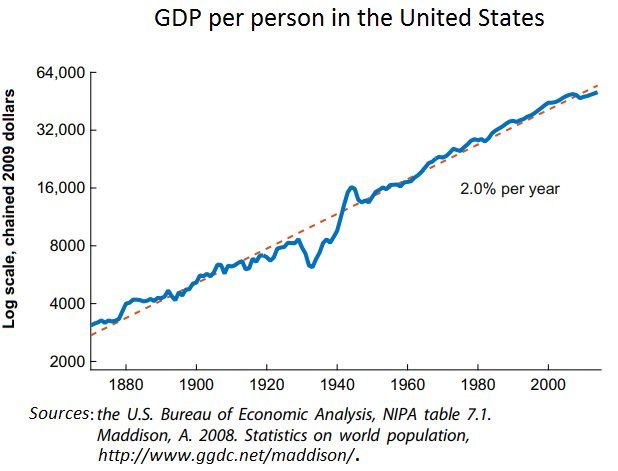
        >growth since the 40s

        The US growth trend has been fairly constant since the late 1800s. There's no real discontinuity in the trend around the time the US become hegemon.

        https://upload.wikimedia.org/wikipedia/commons/0/01/GDP_per_...

        Part of why Switzerland is so stable is because of its neutrality. Switzerland doesn't have to deal with Russia interfering in its elections the way the US does.

      • refurb a day ago

        The US became the wealthiest country on a per capita income basis in the 1880’s, over taking the UK.

        The US was quite isolationist up until the end of WW2, so I’d argue global hegemony isn’t that important when it comes to economic performance.

        • Braxton1980 a day ago

          What about the Spanish American war (1898), the Philippine-American war(1899), and World War One (1917)

    • Ma8ee a day ago

      He'll be gone. The trust in the US won't come back. If your constitution and political system allow such a moron to wreak so much havoc in such a little time, why would we ever trust you again?

      • JKCalhoun a day ago

        I don't disagree. I'm referring specially to the (famously short-sighted) stock market.

    • duskdozer 20 hours ago

      Countries that are reducing their dependence on the US aren't necessarily going to go right back to the way things were. Decisions are sticky.

    • baby_souffle 2 days ago

      Trump, yes. The millions of people that voted for him multiple times despite no shortage of reports and credible allegations that he was a scumbag... Will not.

      Trump isn't the problem, he's a symptom.

      • YZF a day ago

        What you're missing is that America was always like that. And it's been extremely successful. For sure there have been some changes in social dynamics, not just in the US, but worldwide. But the recipe that made the US successful has not changed much. Market economy, geography, attracting talent, innovation, freedom.

      • datsci_est_2015 a day ago

        The rest of the Republican Party is completely devoid of charisma, especially the kind that drew so many voters to Trump. There is no drop-in replacement.

        Lots of money will be spent trying to manufacture a replacement, though. That will be fun to watch. If you thought the last-minute rally around Kamala was tough to watch…

      • UltraSane a day ago

        No, Trump getting elected twice is the exact reason Fox News and the like were created.

cookiengineer a day ago

I wanted to add that since the last threat of Trump in Davos where he didn't even know the difference between Iceland and Greenland and accidentally threatened another sovereign country, almost all social insurances of EU countries have started to liquidate/sell their US bonds and assets.

If that is not a red sign to BlackRock, then I don't know...

thuridas 14 hours ago

You need US dollars because you have with US. Tarrifs hurt the need for dollars.

baby a day ago

Can US debt be seen as equity? We mint equity from times to times, do buy backs, allow people to tokenize it to pay with it and so on...

[removed] a day ago
[deleted]
nazcan a day ago

This is one thing I've heard repeated - that USD needs to be spent in America - seems like other countries could just transact with it directly.

  • thaumasiotes a day ago

    They can and they do; that's called dollarization.

    It's worth observing that dollars that are never supposed to return to the US don't have the same anti-counterfeiting pressure that dollars spent in the US do. I don't know how much of a market there is in counterfeiting USD for dollarized economies.

    • etskinner a day ago

      This sounds hard to believe. Adding anti-counterfeit messures to the bills that have them ($10s and up?) can't be that expensive compared to the value of the note, why would they make two different versions?

      Not to mention, that would break fungibility.

      Can you provide a source?

      • thaumasiotes 11 hours ago

        > Can you provide a source?

        A source... for what claim? What do you think I'm saying?

dgellow a day ago

This time is already different. It's way past the point where the US is unfriendly towards the western world

b112 a day ago

If the US debt gets to the point that interest on debt can't be paid, the US will just print enormous sums of money. Debt is in $, not in valued or devalued currency.

Sure, the end result will be a deprecation of the dollar. But the interest will be paid.

So the real downside to debt is not-overly apparent. Look at how much money was printed for COVID payments, and the like? And at other economic downturns? I do wonder, when will the merry-go-round stop?

sandworm101 a day ago

>> Should the US become an unfriendly power to the rest of the western world, it will find the demand for its currency plummeting, which I don't want to outline is a big issue.

For those who want to return the US to the haydays of manufacturing, the days of cheap steel and people working in mills, a rock-bottom dollar is a necessary first step. To sell widgets, the US dollar needs to be low. And to get workers into low-wage mill jobs the population needs to be hungry.

YZF a day ago

This time is not different in the sense that at some point crazy valuations get a reality check. But that's not "the crash of the US economy", that's a stock market crash, and those will happen (tell me when - I'd also like to know) and they also tend to crash all around the world.

The US economy has had ups and downs and I'm sure will still have but despite the wishful thinking of Marxists it's still the least worst economy around in perhaps the least worst country. It still attracts talent and money. It still leads in many areas. It's still very productive. There are huge ecosystems and a cultural base. It's still the world's largest economy. Where will the balance tilt? China? India?

Anyways, be careful of what you wish for, if the power shifts to China we are going to have a very different world, and not in a good way. I don't think it's even in China's interest to see a large decline of the US, after all they're a big customer.

  • peyton a day ago

    > I don't think it's even in China's interest to see a large decline of the US, after all they're a big customer.

    Yeah aren’t they just Leninist but using us as a signal of what to make? I thought rough shape of the scheme was you get to build a factory using free loans in bullshit money that buys rice and apartments but can’t leave the country, then use that to get real money you can take elsewhere by making shit Americans want to buy. You can’t trade the bullshit money for real money without the factory step.

adventured 18 hours ago

> The US economy depends on the country's position of world hegemon

Your premise depends on that being true, and you stated that like it's a fact. It's an unsupported opinion.

The US economy was the world's largest before 1890, without anything remotely resembling the global reserve currency or superpower military.

fjordofnorway a day ago

> I dont think AI even factors in to this.

I think another way to look at the expansion of the capitalist economy is the onboarding of people into entry day jobs and transitions of economies upward..

AI may have relatively little to do with the US' tantrums yet I think it has a lot to do with the end of expansion and a fast contraction of the availability of top jobs as the last economies enter the middle of the funnel can't be good.

rayiner a day ago

> The US economy depends on the country's position of world hegemon

Citation needed? This feels like a retcon. Remember that the U.S. became the biggest economy in the world in 1890: https://www.digitalhistory.uh.edu/disp_textbook.cfm?smtid=2&.... That was half a century before World War II and the military empire that followed.

  • t-3 a day ago

    The trillion dollars a year pumped into the military support the stock prices of quite a few highly-valued companies. A sudden collapse of hegemony would be bad for "the market", but that seems unlikely unless WW3 actually kicks off instead of a few more rounds of opportunistic snatching and bullying by the big countries, and in that case few people would care about the stock market.

    • rayiner a day ago

      That seems like an application of broken windows fallacy.

ActorNightly a day ago

Its standard Republican playbook.

Get in power, enrich themselves, kick the can down the road to Democrats, then blame the Democrats for poor economy.

This is why ironically Trump cancelling elections and installing himself as a 3d term president would actually be good. People need to see that no matter how bad they think things were under Democrats, it can get much much worse. Say goodbye to your house value and 401k plans for retirement, you gonna be a wage slave well into your 60s, but hey, at least we fixed "wokeness"

eduction a day ago

> if the US continues down the political path it currently seems to be pursuing, 'this time it's different' actually will be

You’ve set no time bound so what you say here is essentially irrefutable. It boils down to “on this path we will eventually have a big bust.” You’re right if it happens in 1 year or 30.

You’ve also not defined the bounds of the path. Paths can weave. So essentially that part of it becomes meaningless because anyone can draw a line that starts with today.

Tech has a long history of boom bust cycles. Some busts are much more mild than others. Some upend the whole economy for protracted periods. In reality no one knows when AI will bust and how bad it will be. Those are the key questions, not whether there will eventually be a tech (or broad) bust. Of course there will be if you’re looking out to infinity days from today.

Most economic commentary is like this including the linked article: so poorly defined as to be low worth as even speculation.

leptons a day ago

Trump famously bankrupted 3 casinos. The US economy will be the 4th.

  • ulfw a day ago

    He bankrupted 4 casinos. 2 in one swoop.

[removed] a day ago
[deleted]
benSaiyen a day ago

Simple solution; raise taxes. Been saying that will be the outcome eventually as the olds continue to die and the youth feel zero obligation to senile pants shitters and corpses. GenZ fucking hates Boomers and a whole lot of GenX (that insurance CEO? GenX. Epipen price hiking CEO? GenX. Whole lot of tech CEOs of note? Yup, GenX) Generations beyond Z will never experience Boomers and 1900s American life. They won't care about an arbitrary line in the sand. GenX ain't getting any younger, won't have Boomer support.

A reasonable scenario right now; rest of the world intentionally collaborates to isolate US, destabilize US, act as a forcing function for US to reassert internal control by swiftly deflating buying power of useless rich[1]. The world is sick of US CEOs who do little but jiggle values in spreadsheets. Sundar and many others have said CEOs are likely a very easy job to automate away; useless pageantry. There is rapidly growing domestic and overseas will to depose those non-contributors.

Fastest way to stem the collapse of reality for 10s of millions of Americans with a lot of guns too.

[1] Americans buying power has been deflated by 300% since 1980... I am sure it is purely coincidence Boomers have run the world for most of it.

  • majormajor a day ago

    "Soak the rich" laws were passed around a hundred years ago in the US in response to obscene wealth; worked out pretty well for a long time before they got rolled back and we got a new round of oligarchs.

fsckboy a day ago

>The US economy depends on the country's position of world hegemon

no it doesn't.

it's much closer to "you need the best economy to be a hegemon"